Wolf: A Modern Display Font for Stronger Brand Identity
As a small business owner who designs most of my own marketing materials—from product labels and Instagram posts to café menus and thank-you cards—I’ve learned that font choice isn’t just about aesthetics. It’s one of the fastest, quietest ways to signal professionalism, consistency, and intentionality to customers. That’s why I was immediately drawn to Wolf: a geometric display font that feels both bold and refined, modern without being cold, distinctive without sacrificing clarity.
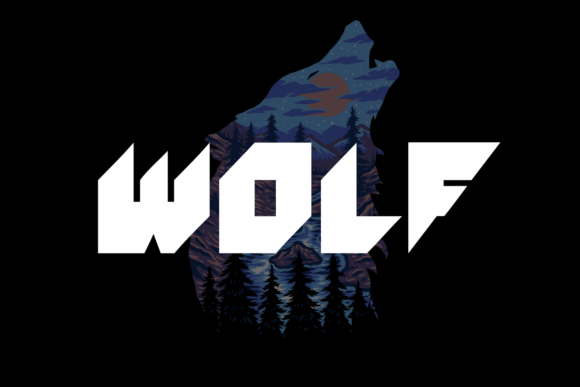
Wolf isn’t a workhorse body text font—and it’s not meant to be. It’s a display font, designed to command attention in headlines, logos, packaging accents, and social media banners. Its clean lines, balanced proportions, and subtle angularity give it a confident, contemporary energy—ideal for brands that want to stand out in crowded digital feeds or on boutique shelves. Think of it as the visual equivalent of a well-tailored blazer: sharp, memorable, and instantly elevating.
I first tested Wolf on my handmade candle line’s product labels. Replacing a generic sans serif with Wolf for the scent name—“Sage & Smoke”—immediately tightened the look. The font’s geometry echoed the clean shape of the glass vessel, while its presence made the label feel intentional, not DIY. Customers noticed. Several tagged us in unboxings, commenting on how “polished” and “thoughtful” the packaging felt. That’s the power of a strong display font: it quietly reinforces trust before a single word is read.
Wolf works especially well across high-impact, low-word-count touchpoints. Use it for:
- Your logo or wordmark—especially if your business name is short (e.g., “Lume,” “Rook,” “Vale”) or has strong consonants that pop in Wolf’s structure
- Product names and flavor variants on food, skincare, or beverage packaging
- Menu headers at cafés or bakeries (try “Daily Specials” or “House Roast” in Wolf, paired with a warm, readable sans serif for descriptions)
- Social media graphics—Instagram carousels, Pinterest pins, and Facebook cover images where bold typography stops the scroll
- Stickers, tote bags, and thank-you cards where you want brand recognition at a glance
Readability matters—even in display fonts. Wolf holds up well on small surfaces like jar labels or QR code stickers, thanks to its open counters and generous spacing. On mobile screens, it remains legible in larger sizes (24pt and up), especially when used for short phrases or single words. For longer blocks of text—like website body copy, email newsletters, or service descriptions—pair Wolf with a clean, highly readable sans serif (think Inter, Poppins, or Montserrat) or a friendly serif (like Lora or Playfair Display). This creates hierarchy: Wolf draws the eye, your supporting font delivers the message.
Real pairing examples that work for small businesses:
- A beauty brand uses Wolf for “Hydrate” on a serum bottle, then pairs it with a soft, neutral sans serif for ingredient lists and usage instructions.
- A coaching business features Wolf in their Instagram bio header (“Clarity Starts Here”), then uses a warm, humanist sans serif for session descriptions and testimonials.
- A local bakery prints Wolf on laminated menu boards above pastry names (“Almond Croissant,” “Maple Scone”), then sets prices and daily specials in a light-weight, airy sans serif.
Before rolling Wolf across your entire brand, test it in context. Print a mock-up label. Zoom in on your phone to see how it looks in a Stories highlight. Paste it into your Canva template and check contrast against your background colors. Does it still feel aligned with your brand voice? If your shop is cozy and rustic, Wolf’s precision may need warming up with texture, color, or supporting imagery. If you’re sleek, minimalist, or tech-adjacent, it’ll likely click instantly.
One practical note: always verify the commercial font license. Wolf is a premium font intended for professional use—but not all licenses cover merchandise, client deliverables, or digital product templates. If you plan to use Wolf on product packaging you sell, printed marketing collateral, downloadable Canva templates, or branded merch (like mugs or T-shirts), confirm your license includes those rights. It’s a quick check that protects your business and supports the designer behind the typeface.
Consistency builds recognition—and recognition builds loyalty. When your customer sees Wolf on your Instagram post, then again on your shipping label, then again embossed on a gift card, they’re subconsciously registering cohesion. That tells them you pay attention to detail, you respect your craft, and you value their experience. Wolf doesn’t do the work for you—but it gives your brand a strong, unified voice across every surface your customers touch.
For independent creators launching a new line, rebranding a café, or refining a boutique’s packaging system, Wolf is more than a font. It’s a design asset that helps translate your vision into something tangible, repeatable, and unmistakably yours. It’s the kind of detail that makes people pause, remember, and come back—not because of a flashy ad, but because your brand simply feels *right*.